

Using Anki Flashcards
Using Anki Flashcards To Improve One’s Vocabulary And Grammar
Yes, Anki could be your gateway into a whole new world of mastery of subjects you might be struggling with!
Before anything else, click here here to download the Anki app onto your devices, including your laptop, iPad and phone.
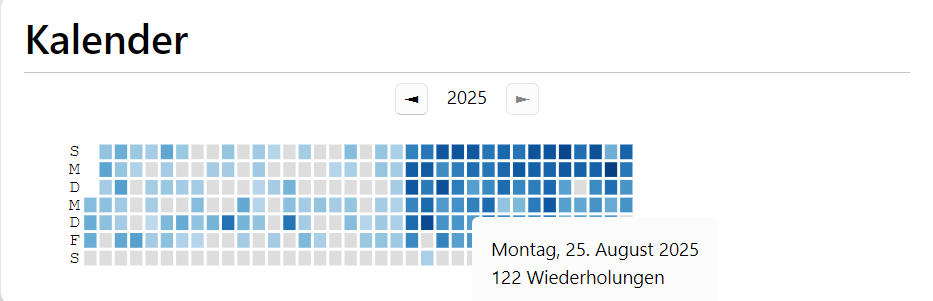
Next, below is a bit of evidence that I’m no amateur when it comes to Anki. In addition to the fact that, as you can see, I’ve set my Anki app to the language I’m trying to master (German; Montag means “Monday” and Wiederholungen means “repetitions”), I’ve recently “played” as many as 122 Anki cards in a single day, complete with all of the card-by-card expansions and updates I recommend whenever one doesn’t “get” a card, which I’ll be outlining in great detail below …
Anki Card Set-up (for vocabulary; reminder that you can also use Anki for grammar or anything else you want to learn well):
It’s a good idea to set the card type to “type in,” so that you’re encouraged to spell the word out as well as say it out loud
Definition(s) on front side: drawn from a standard dictionary (ideally in the same target language as the vocabulary word you’re trying to learn)
Vocabulary word on back side: all relevant forms (e.g., all important conjugations of a verb)
Example sentence using that vocaulary word
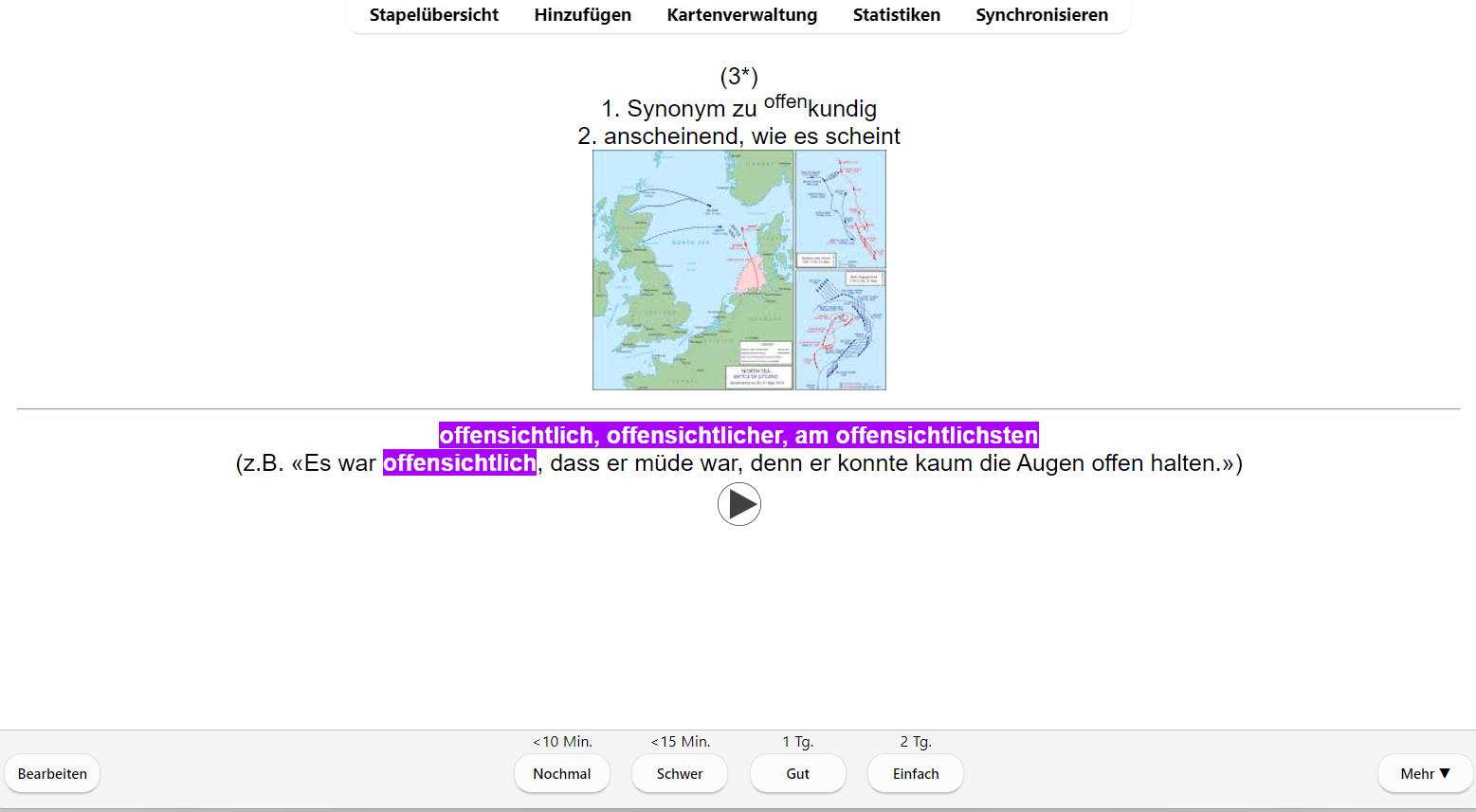
Addtional steps I take (info to add) if I don’t master a word right away (which is far more often than not):
Add an image drawn from the web that represents that word well (much like you would find next to the word in an encyclopedia or Wikipedia; in fact, I often plug “wikipedia [voaculary word]” into Google to find a relevant image)
Start underlining words in the defintion (front side of the card) you might not know either, and add those to Anki as well (or at least add them to a to-add list once you’ve looked them up); as you might already imagine, this will start a chain reaction of learning that will help expand your vocabulary in all kinds of directions while providing synergistic context
A next step is to start underlining the separate components of the target word (if it’s a compound word like “afternoon”) and treating them like the vocabulary in step #2 (adding those components to Anki or at least to an Anki to-add list).
Make a short recording of yourself saying the word out loud (by punching the microphone icon in the row at top in “edit” mode) after listening to a good-quality recording on a dictionary website and reviewing the IPA spelling, then adding that recording to the back side of the card; this will make the word stick out in your mind and also help if you’re struggling with proper pronounciation of the target word
If you’ve defined all unknown words on both front and back and you still haven’t nailed the target word, consider gradually adding subtle hints to the front side of the card: putting letters or groups of letters in the target word in superscript, putting letters or groups of letters that are not in the target word in subscript, then capitalizing, emboldening, italicizing and color-coding those letters or groups of letters one at a time, recording audio hints to add to the front side, etc. …
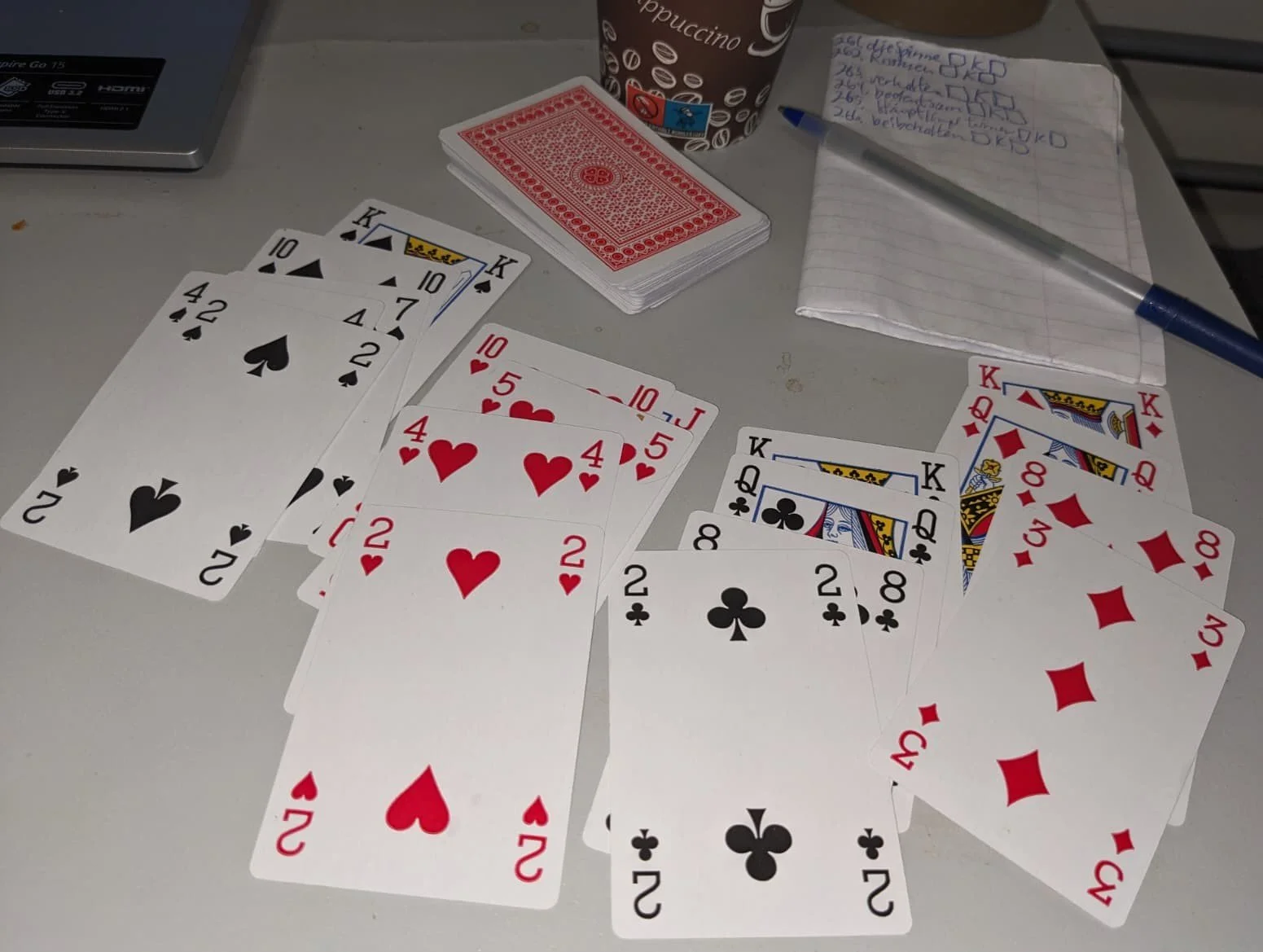
One last tip regarding Anki (at least last one for now): also consider getting yourself a physical deck (or two or three) of poker cards, and “playing” those cards by suit or in some other way (after shuffling them, of course) onto your work desk during the day to give yourself a visual demonstration of how many cards (or how few cards) you’ve gone through any given period …